CasesBooyaKa Festival
Fifty-four people in a church, in six days
Paid and organic acquisition for the ninth edition of BooyaKa Festival — “The Business of Love” — at the Keizersgrachtkerk in Amsterdam, Sunday 1 November 2026. Hosted by Akshay Mahajan of Black Puma Studios.
Figures read directly from Meta Ads Manager, TikTok Ads Manager, Luma and Hipsy on 2 November 2026.

The event
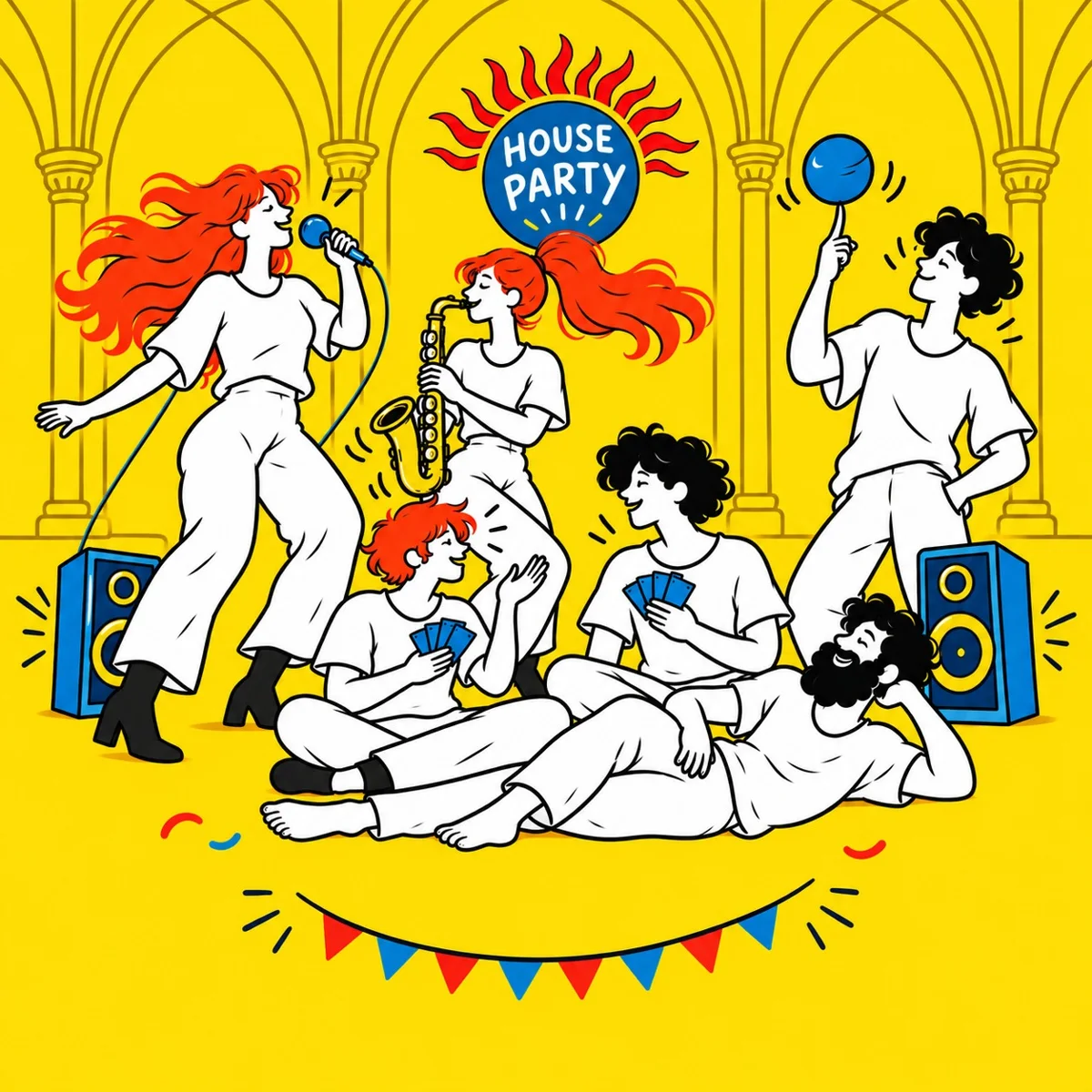
BooyaKa is a house party in a church. An afternoon of live music, movement and unplanned conversation at the Keizersgrachtkerk, built so that guests move from sitting and talking to playing along with the artists. Entry is free, contributions are voluntary, and nobody needs any musical experience to take part.
The ninth edition ran on Sunday 1 November 2026 under the theme The Business of Love, with a line-up of five artists and a programme that escalated from quiet to party across three hours.
The brief
Fill the room.
A free cultural event with no ticket revenue to recover media spend from, a venue that caps at 200, a mixed Dutch and international audience, and a runway of under two weeks from first creative to doors open. The budget was deliberately small — the question was not how much reach money could buy, but whether a game-shaped creative idea could move strangers from a feed into a church on a Sunday afternoon.
What we built
Six “Levels” videos as a game series
Rather than six variations of an event announcement, the creative ran as a progression. Each film unlocked a level — It will entertain, Heal, Inner child, Player 5: Peanut Butter and on — with experience points, a shared visual grammar and a single line holding the set together: Come and play. The series gave an audience a reason to watch the next one instead of scrolling past the same message twice.
Two paid platforms, eight ad groups
Meta carried the weight across seven ad sets: a web-traffic set against the main landing page, a house-party variant, a Messenger DM set, a call-ad set, a Dutch-language set, an English-language set and a separate set routed to a Hipsy ticket page as a controlled test. TikTok ran one campaign to the English page. All of it was built to be read and switched inside a single working day.
Daily monitoring on a live dashboard
Spend, impressions, clicks, landing page views, Luma page views by the hour and registrations per source were pulled into one monitor that the team read every morning. On a six-day runway there is no time for weekly reporting: budget moved between ad sets while the campaign was still running, and the sets that were not converting were turned off rather than left to finish their flight.

The numbers
Attendance was counted in the room by the team. It appears in no dashboard: no check-in was taken in Luma, so for a free event this figure only exists if someone counts.
Where the money went
Spend per ad group, 20 October – 1 November 2026. All paid delivery stopped at 14:30 on the day of the event.
Where the impressions went
TikTok bought more than half of all impressions for eleven per cent of the budget — €0.56 CPM against Meta’s €4.98 — and produced no traceable registration.
Registrations per page
Four live registration pages for one event. Only two of them were ever an ad destination.
Platform summary
| Channel | Spend | Impressions | Clicks | CPM | CPC |
|---|---|---|---|---|---|
| Meta (7 ad sets) | €375.77 | 75,382 | 3,569 | €4.98 | €0.11 |
| TikTok (1 campaign) | €47.10 | 83,750 | 579 | €0.56 | €0.08 |
| Total | €422.87 | 159,132 | 4,148 | — | — |
Meta figures re-read on 2 November 2026 and unchanged from the final read on the day of the event. TikTok figures are from the last available read on 31 October.
Organic
Fifty-seven organic posts, reels and stories went out across the BooyaKa Festival Facebook page and Instagram between 25 October and the event itself, for 6,970 views in total. The single strongest piece was an Instagram reel showing the venue — 1,447 views, 1,021 reach, 22 likes and seven shares — published three days before doors. Everything else on organic was a story, and stories on this account sat between thirty and a hundred views each.
What we learned
The most expensive mistake was not in the media — it was in the plumbing. Four separate registration pages were live for one event: three Luma pages, including a second English page that no ad ever pointed at, plus a Hipsy ticket page. Traffic, social proof and retargeting pools were split four ways, and there was never a single number anyone could look at and call “registrations”. One canonical page with language variants behind it would have concentrated everything the campaign was trying to build, and would have made every figure on this page an order of magnitude more trustworthy. This is the first thing to fix for the tenth edition, and it costs nothing.
The second was the missing Meta Pixel. With no pixel on the destination, there was no audience of site visitors to retarget — the people who had already shown intent by clicking through were unreachable after the click. It also meant the campaign could not optimise for registration; Meta was asked to buy landing page views instead, which it did, very efficiently, at €0.11 a click and 2,911 landing page views for €375.77. But a landing page view is not a signup, and roughly two per cent of them became one. On a six-day runway with a warm local audience, retargeting the clickers would plausibly have been the cheapest registrations available, and the campaign simply could not run it. Installing the pixel and defining a registration event is the second free fix.
The Hipsy route was a deliberate test and it answered its question, just not in the way we wanted. Sending €49.73 to a Hipsy ticket page bought the cheapest clicks of the whole campaign — €0.07 a click at a 7.4% click-through rate — and seven tickets came out the other end. But Hipsy records no source against an order, so those seven are a count, not an attribution: we know they exist, we cannot prove the ads produced them. The lesson is not that Hipsy underperformed; it is that handing traffic to a platform that will not hand measurement back ends the experiment at the moment it gets interesting. TikTok taught a sharper version of the same thing. It delivered 83,750 impressions for €47.10 — a CPM of fifty-six cents, nine times cheaper than Meta — and not one registration on any Luma page carries a TikTok source. Cheap reach is not cheap attention, and on a six-day window for a physical event in one city, a platform with no local intent signal had no time to earn its place.
Finally, registrations and attendance are different things, and at a free event the gap between them is the whole commercial question. Sixty-six people put their name down across four pages and fifty-four walked in — a show-up rate of 82%, which for a free event with no deposit and no ticket is a good result rather than an average one. But that number exists only because the team counted heads: no check-in was taken in Luma, so nothing in any dashboard would have told us. It also moves the real media cost from €6.41 per registration to €7.83 per person actually in the room, which is the figure worth planning the next budget against. For the tenth edition the fix is operational rather than creative: take check-ins at the door, so the ratio between registration and attendance is measured rather than remembered. What did work, and is worth carrying forward, is the shape of the creative and the speed of the loop. A six-part game series gave an audience a reason to come back to the feed rather than one announcement to ignore, Meta and organic reinforced each other on the same “Come and play” line, and reading the dashboard every morning meant budget moved off the ad sets that were not converting while there was still a campaign left to spend it on.
Concept, project lead and prompting: Waterproofmedia. Production: Claude AI.
Campaign figures read from Meta Ads Manager, TikTok Ads Manager, Luma and Hipsy on 2 November 2026.
Ready to grow?
Tell us briefly what you want to achieve. We will help you find the best first step, even if it is a small one.